
Pelletizing Bentonite: A Proven Solution for Stronger, Cleaner Pellets
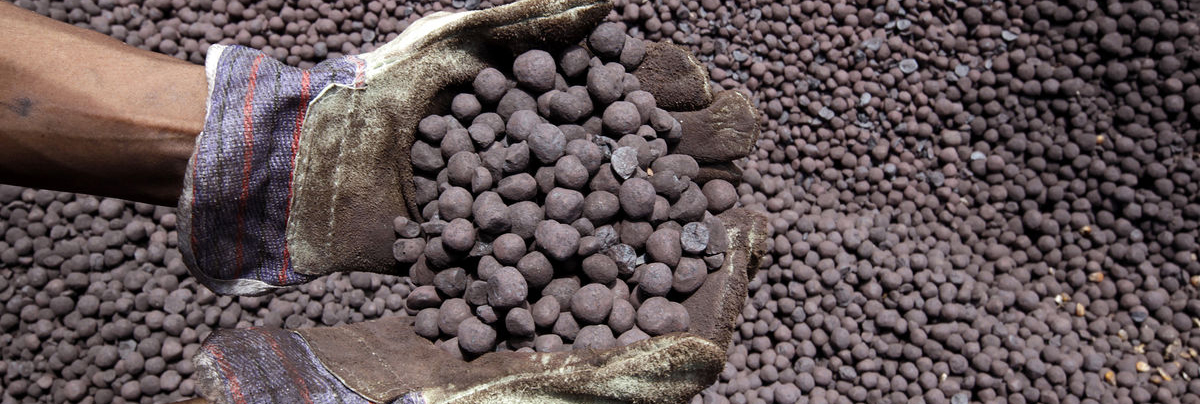
In the steel industry, pelletizing transforms iron ore fines into uniform, robust balls—known as pellets—ready for blast furnaces or direct-reduction units. This agglomeration uses additives to bind fine particles, and bentonite serves as the primary natural binder, thanks to its layered montmorillonite structure and surface charges that promote strong interparticle cohesion.
Key Roles and Benefits of Pelletizing Bentonite:
- High binding strength: Bentonite’s montmorillonite layers and surface charge enable it to bond iron ore fines into consistently shaped pellets that resist breakage during handling and processing.
- Water absorption and swelling: Upon hydration, bentonite rapidly absorbs water and swells, creating stronger interparticle links and boosting the green (unfired) pellet strength.
- Enhanced mechanical durability: Bentonite improves pellet strength at every stage—green (to withstand transfer and drying), preheated (to tolerate thermal stresses), and indurated (to maintain shape during storage and transport).
- Reduced fines generation: By forming a cohesive pellet structure, bentonite limits the production of broken or crushed particles, increasing overall plant efficiency and reducing material loss.
- Thermal stability: Bentonite retains structural integrity at high temperatures, minimizing unwanted reactions with iron during induration—critical for both non-ferrous and high-melting-point alloy pellets.
- Cost-effectiveness and ease of use: Compared to synthetic binders, bentonite is widely available, simple to process, and economical, making it a practical choice for large-scale pellet plants.
Our Products
Contact Information
Sales manager: +98 915 334 6095
Phone Number: +98 56-3132 | +98 56 3161 0000
Factory Address: Industrial Estate of Khusf - South Khorasan Province - Iran
Email: info@KianBentonite.com